
I handle Colonial and Revolutionary-era Americana - militaria, textiles, and everyday objects. I research each one, which means chasing down archival sources, muster rolls, family letters, estate inventories, whatever is out there.
As a professional historian with decades of academic and museum curatorial experience, I delight in finding the story behind the objects I sell. The name and date on a powder horn, for example, can provide clues that allow us to deeply contextualize its creation, its owner’s camp and battle experiences, and perhaps something of what the horn meant when the soldier came home. Construction details in a chest or a piece of clothing might give us its approximate date and location of its creation, and, by extension, reveal something about the values and priorities of its original maker or owner. Letters and ownership inscribed books tell us about reading habits and how people communicated across distances, particularly when separated by the dangers of war and conflict. These are not just objects. They are surviving testaments to past lives.
I also take consulting work for collectors, museums, and academic institutions and historians, including appraisals, provenance and historical research, and exhibition development.
Loading the collection…
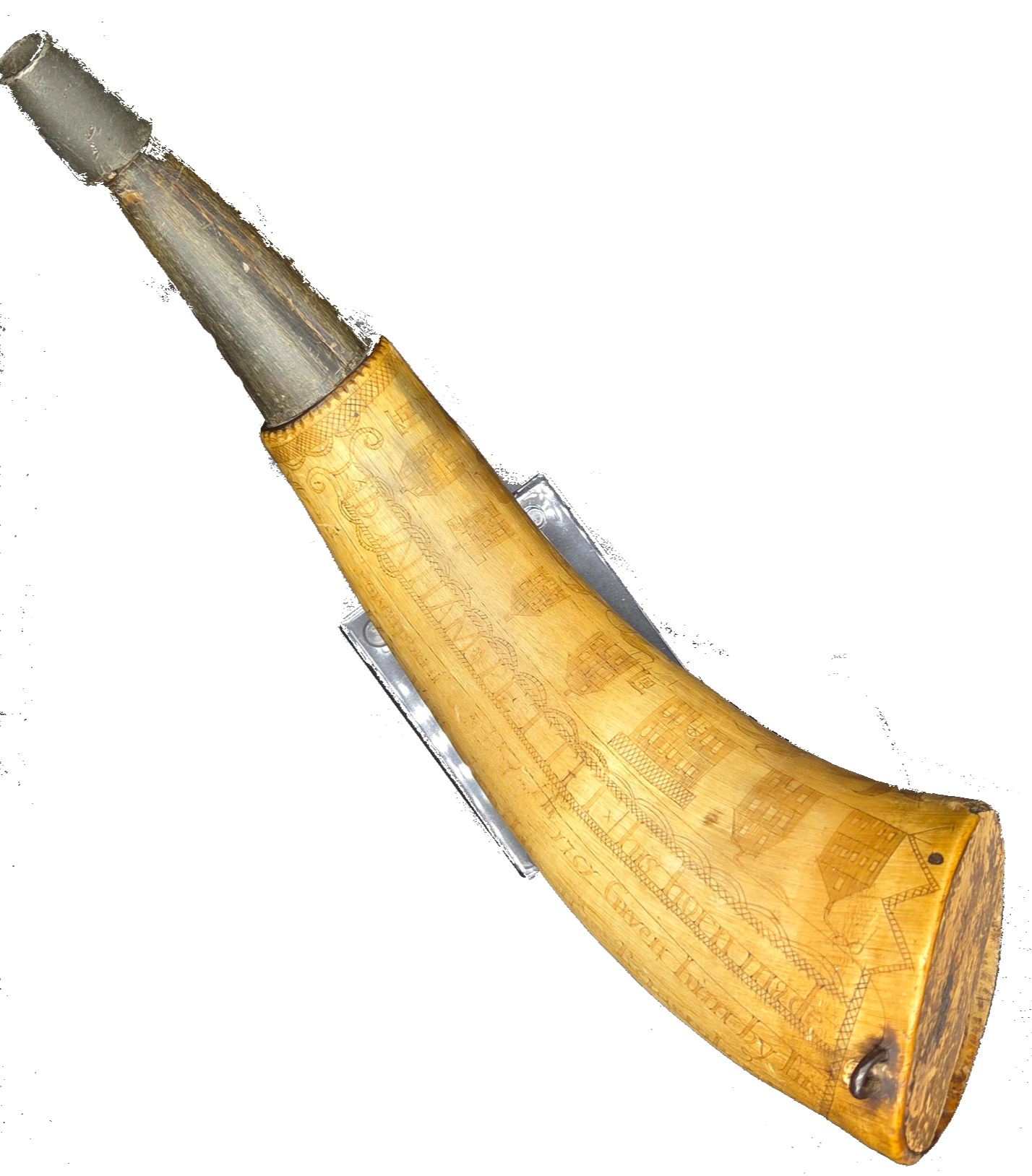
Carved at Crown Point on 19 October 1761, this powder horn belonged to eight-year-old Dunham Pettit, gift of his brother John, a private in the Second Connecticut Regiment. Its carver is linked to only one other known horn - made for a Black soldier, Prince Negro, whose free status this association helps to confirm.